TL;DR
Yale's CarDS Lab built a deep-learning model that spots transthyretin amyloid cardiomyopathy — a deadly, widely underdiagnosed heart condition — from a plain photo of an ECG tracing. Published in JAMA, granted FDA breakthrough-device designation, and now being tested at 13 US health centers.
The disease hiding in plain sight
Transthyretin amyloid cardiomyopathy (ATTR-CM) happens when misfolded transthyretin proteins clump together and accumulate on the heart muscle, stiffening it. Left untreated, it can be deadly — and it is massively underdiagnosed. Many patients only receive the diagnosis in its late stages, after dangerous complications like heart failure have already set in.
Treatments exist. The bottleneck has never been the medicine — it has been finding the patients in time. As principal investigator Rohan Khera put it: “We've been able to solve a critical bottleneck in deploying therapies by identifying more at-risk people.”
Your phone camera is the scanner
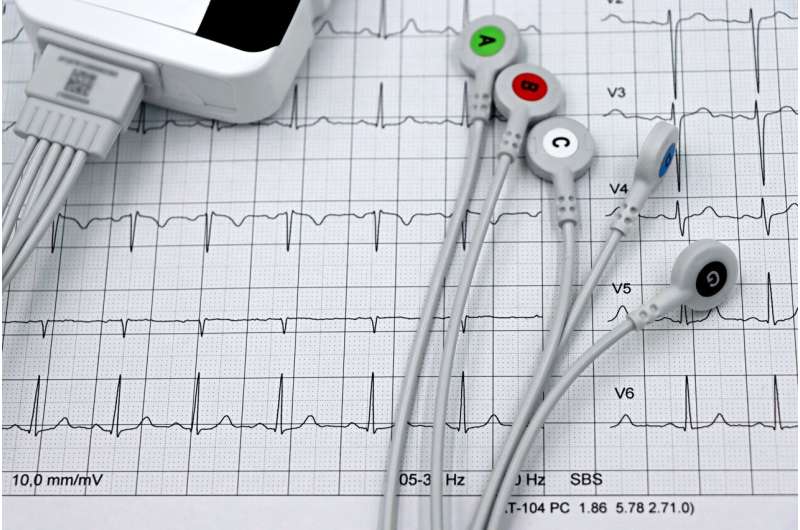
The Yale team's key insight was to read the ECG the way it actually exists in the wild: as an image. The model takes a smartphone photo, a scan, or a PDF of a standard ECG tracing — no new hardware, no rebuilt hospital IT system. “You can take a photo of an ECG like you would take a photo of a bank check,” Khera says. “Our model can pick up from that photo whether the ECG came from somebody at risk for cardiac amyloid or not.”
It was trained on 28,174 ECGs from 11,291 patients in the Yale New Haven Health System, including 293 with confirmed ATTR-CM. In internal validation across 44,123 patients it scored 0.84 AUC — 72% sensitivity and 86% specificity at the study's preset threshold.
Then came the hard test: eight separate patient cohorts across nine hospitals in five countries (the US, UK, Netherlands, Denmark, and Greece). The score held at 0.76 to 0.91 — including 0.81 in patients whose conditions mimic amyloidosis, like left ventricular hypertrophy and severe aortic stenosis, exactly the cases where a screening tool has to prove it isn't just guessing.
From paper to patients
The study, led by first author Philip Croon in Khera's Cardiovascular Data Science (CarDS) Lab, was published in JAMA. The platform has already received the FDA's Breakthrough Devices Program designation, which puts it on an expedited review track — it is currently under FDA review.
Meanwhile the real-world test is underway: the TRACE-AI Network Study, an observational study across 13 health centers, is evaluating whether the tool can find at-risk patients at scale in ordinary clinical settings. If it works there the way it worked in the validation cohorts, the standard ECG — the cheapest, most common heart test in medicine — becomes a front door for catching one of cardiology's most elusive killers.