TL;DR
Microsoft unveiled the Azure Maia 300, its third-generation homegrown AI accelerator, and said it will scale the Maia family to multi-gigawatt deployments starting in 2027 — at which point Maia becomes the primary inference system for Microsoft's own products. Reuters reports the company plans to deploy potentially more than a million of them next year. Microsoft claims 40% more tokens per megawatt than leading GPU systems and up to 7x the rack throughput of the Maia 200.
The announcement
Scott Guthrie, Microsoft's executive vice president for Cloud + AI, laid it out in an official blog post Monday: starting in 2027, Microsoft will scale its Azure Maia family to multi-gigawatt deployments, and Maia will become the primary AI inference system for Microsoft products and services.
The program is already past the prototype stage. Maia 200 is in production now, serving Microsoft Copilot workloads and supporting Microsoft's in-house MAI model team, running OpenAI models, MAI models, and open-source model families across datacenters in the US, Europe, and Australia. GitHub Copilot and Microsoft Foundry are slated to follow by the end of the year. Maia 300 starts rolling into production in 2027.
The silicon
Maia 300 is an inference-first design aimed at the workloads Microsoft says are growing fastest: long-context reasoning, latency-sensitive conversational AI, and sustained multi-step agentic tasks. The chip uses a multi-chiplet layout — compute chiplets on TSMC's 2nm-class N2P process, with the data-movement and I/O chiplets on cheaper 3nm silicon — a different bet from Nvidia's one-big-die approach.
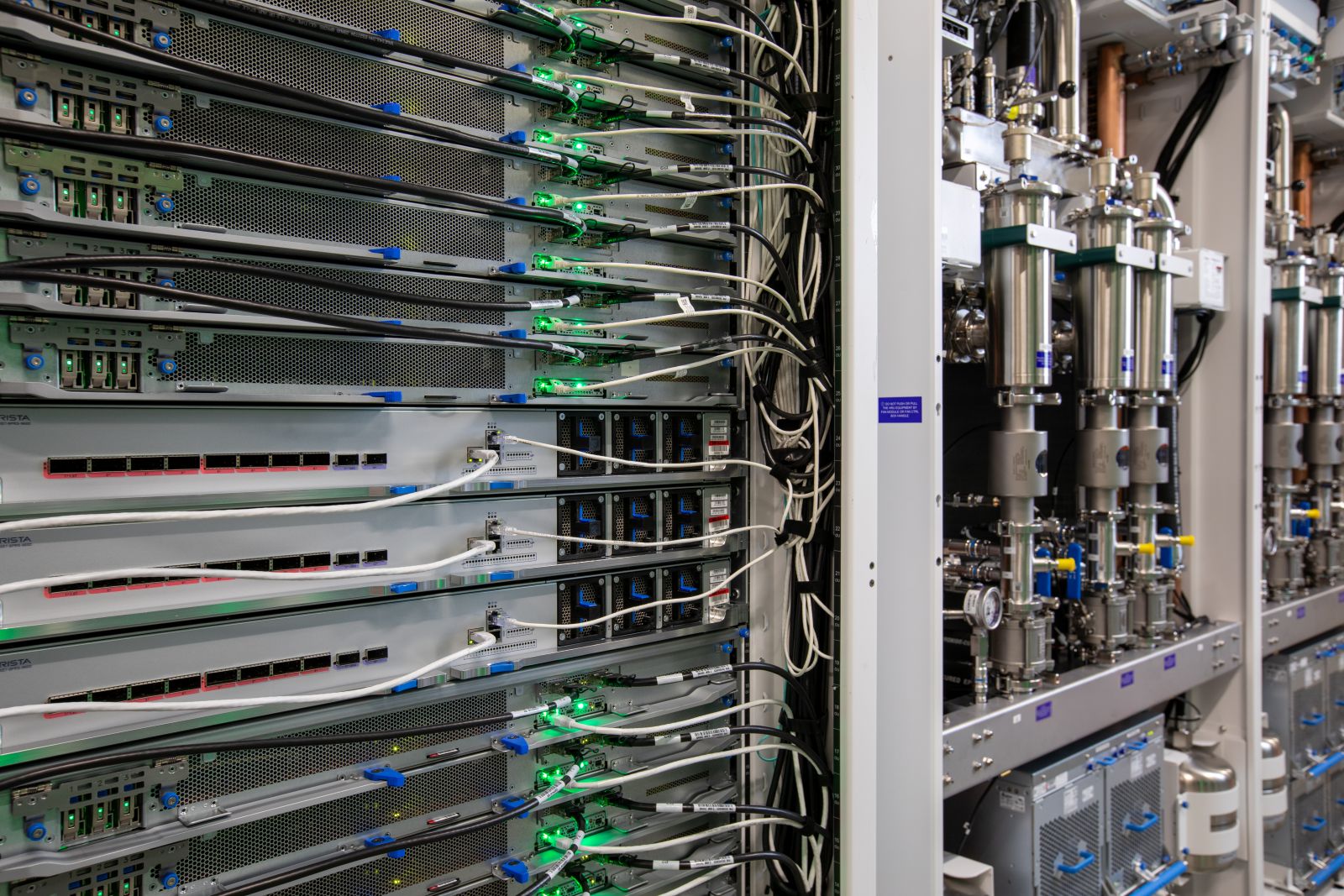
Each accelerator carries eight HBM4 memory stacks delivering 18.0 TB/s of peak bandwidth inside a 950-watt thermal envelope. In the full 96-accelerator rack configuration, a rack holds 27.6 TB of HBM capacity and 1.7 PB/s of aggregate bandwidth within a 167-kilowatt power envelope. Microsoft says the design, plus support for low-precision formats like enhanced MXFP4, delivers 40% more tokens per megawatt than leading GPU-based systems and up to 7x the rack-scale token throughput of the Maia 200.
Two honest caveats: those are Microsoft's own numbers, not independent benchmarks, and the comparison systems weren't named. This is a roadmap announcement, not proof that Azure has swapped its GPU fleet — production deployment starts in 2027.
A million chips
The scale is the real story. Reuters reports Microsoft plans to deploy potentially more than a million Maia 300 chips starting next year — and the company says it expects to spend more than $175 billion in capital expenditures this calendar year. Power has become the binding constraint on AI expansion, so the efficiency play doubles as a capacity play.
“It's basically delivering more intelligence for every watt, every dollar, and every byte of memory by optimizing across the entire system,” Rani Borkar, president of Azure hardware systems and infrastructure, told Reuters.
Nvidia isn't going anywhere
This is about cost and control, not a breakup. Nadella and Huang shared a stage just last week to launch the Nvidia-powered Surface Laptop Ultra — Microsoft remains one of Nvidia's biggest customers and keeps buying Nvidia hardware for its datacenters alongside its own silicon.
That's the industry pattern now: Google's TPUs, Amazon's Trainium, Meta's MTIA. Every hyperscaler is building its own chips while still buying Nvidia's. The goal is leverage — every Copilot query that runs on a Microsoft-designed chip is one less query paying the Nvidia tax.