TL;DR
Meta released the weights for Muse Spark Open today: an 816-billion-parameter open-weight model built for coding and long-running agent work, with a 1-million-token context window. Meta tuned it with Apple to run on two M5 Ultra Mac Studios — and it's free to download under a limited-commercial license.
What dropped today
Meta released the open weights for Muse Spark Open on October 15, 2026 — the same model family behind Meta AI, which had been proprietary since its April debut. Meta calls it the most capable U.S. open-weight model to date. It is a mixture-of-experts model: 816 billion parameters in total, with only 42 billion active for any given token, and a 1-million-token context window.
It is natively multimodal — it takes in text, images, documents, audio, and video and returns text — and it was trained on real developer workflows like multi-file refactors and long debugging sessions. Meta built it for agentic work: the model plans, acts, observes the result, and corrects itself over long horizons rather than making single tool calls. The release ships in full-precision BF16 and a compressed NVFP4 build that cuts memory needs to roughly a quarter.
It runs on two Mac Studios
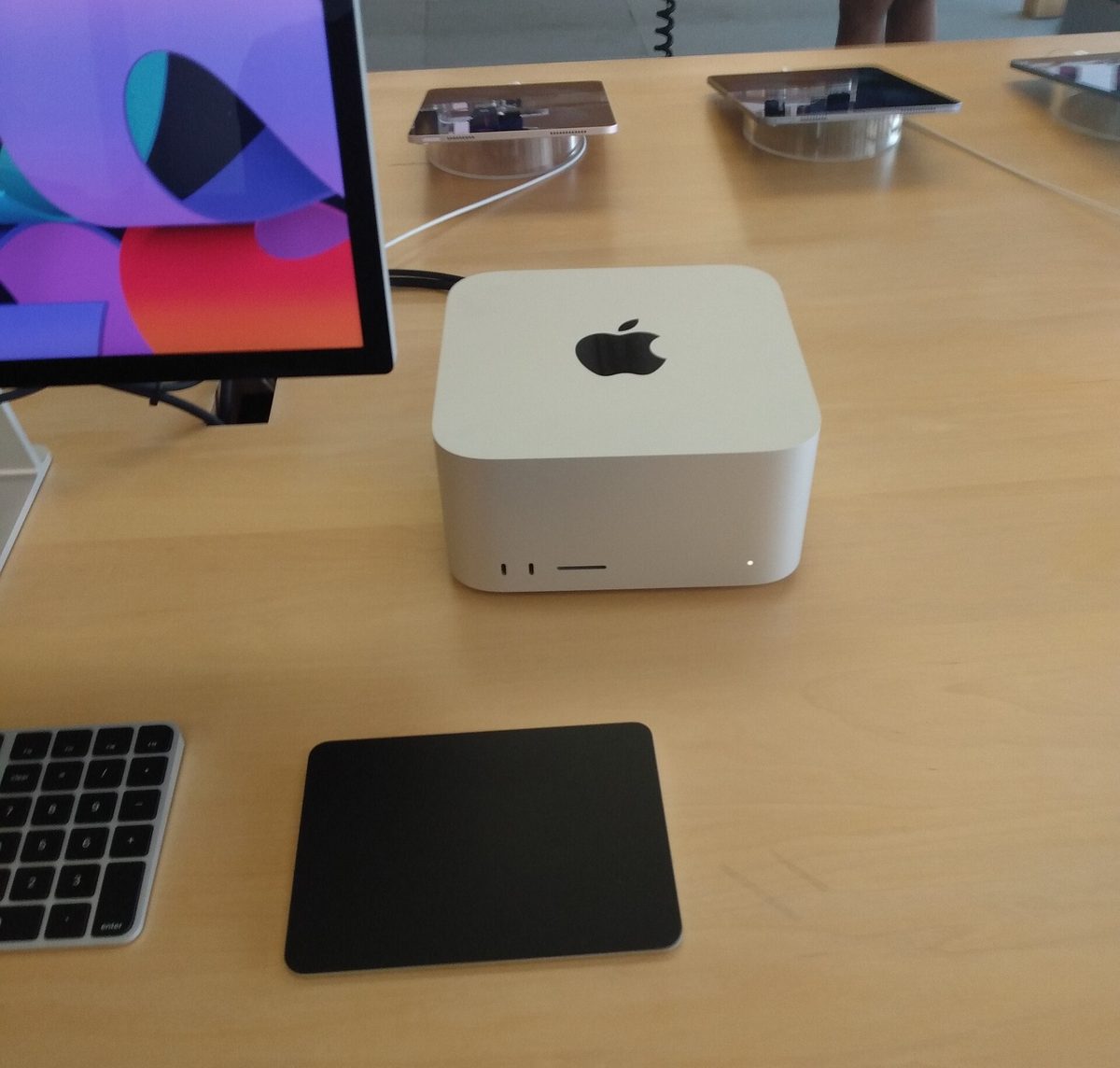
The head-turner is the Apple angle. Meta worked with Apple to tune the model for Apple's MLX framework on the Mac Studio with the M5 Ultra chip. Two 512GB Mac Studios pool a terabyte of unified memory, and the chip's 1.2 TB/s of memory bandwidth is fast enough to feed the small slice of the model each token needs — so the two machines behave like one supercomputer holding the entire model. Meta calls the setup the best way to run a powerful model on your own desktop, and Meta CEO Mark Zuckerberg thanked Apple CEO John Ternus for the collaboration.
To show it off, Meta ran Muse Code — its AI coding terminal — powered by Muse Spark Open entirely on-device: it shipped real changes to Ice Cubes, an open-source Mastodon client, covering bug fixes, new features, and a full build. In another demo, the model drove DaVinci Resolve end to end, reviewing footage frame by frame to find the strongest moments and crop them for vertical video. The catch: this is not a laptop download. Even the compressed weights are hundreds of gigabytes, and the 512GB Mac Studio configuration doesn't ship until later this month — with the 256GB version already priced over $10,000.
Benchmarks and the fine print
In Meta's own benchmark table, Muse Spark Open scored 61.8 on the JobBench agent test — more than twice the 31.1 from Inkling, the U.S. open model from Thinking Machines Lab, and ahead of NVIDIA's Nemotron 3 Ultra at 27.2. On the Terminal-Bench 2.1 coding test it hit 76.4, but the top Chinese open models still lead: Kimi K3 at 85, with GLM 5.3 and Qwen3.8 also finishing above it. Treat those numbers as company claims until independent testing lands.
The weights are free to download from Hugging Face, Amazon SageMaker AI, Google Cloud Model Garden, and Microsoft Foundry Models. But read the license before treating it as unrestricted open source: it ships under the Muse Model License with limited commercial terms. Day-one API access runs through Baseten, Fireworks AI, Groq, Modal, Nebius, OpenRouter, and Together AI, and Amazon's SageMaker JumpStart already offers BF16 and NVFP4 variants in its US East regions.
Why this matters for builders
This lands three days after Meta launched Muse Wonder, its closed frontier model — so Meta is now running a two-track strategy: the best model stays closed, and the agentic workhorse goes open. If you build coding agents, the pitch is practical: you can download the weights, run the model inside your own infrastructure, and keep proprietary code on machines you control instead of sending it to an API.
A million tokens of context also changes the shape of what an agent can hold in one go: whole repos, dependencies, and long documents without splitting tasks into pieces. Try the hosted API first to see whether the model's reasoning style fits your workflow, then check the NVFP4 build — it's the cheapest serious route to running it yourself.