TL;DR
Ghost, a startup founded by 19-year-old Zain Javaid, came out of stealth on October 5 with Core: a $3,499 screenless computer built to run AI agents on hardware you own, not on someone else's cloud. It bundles an Nvidia RTX Pro 4000 Blackwell GPU, ships with Qwen and Gemma models preinstalled, and the company's $11 million Andreessen Horowitz-led seed round is betting consumers will pay for local AI. Preorders are open; shipping starts late October.
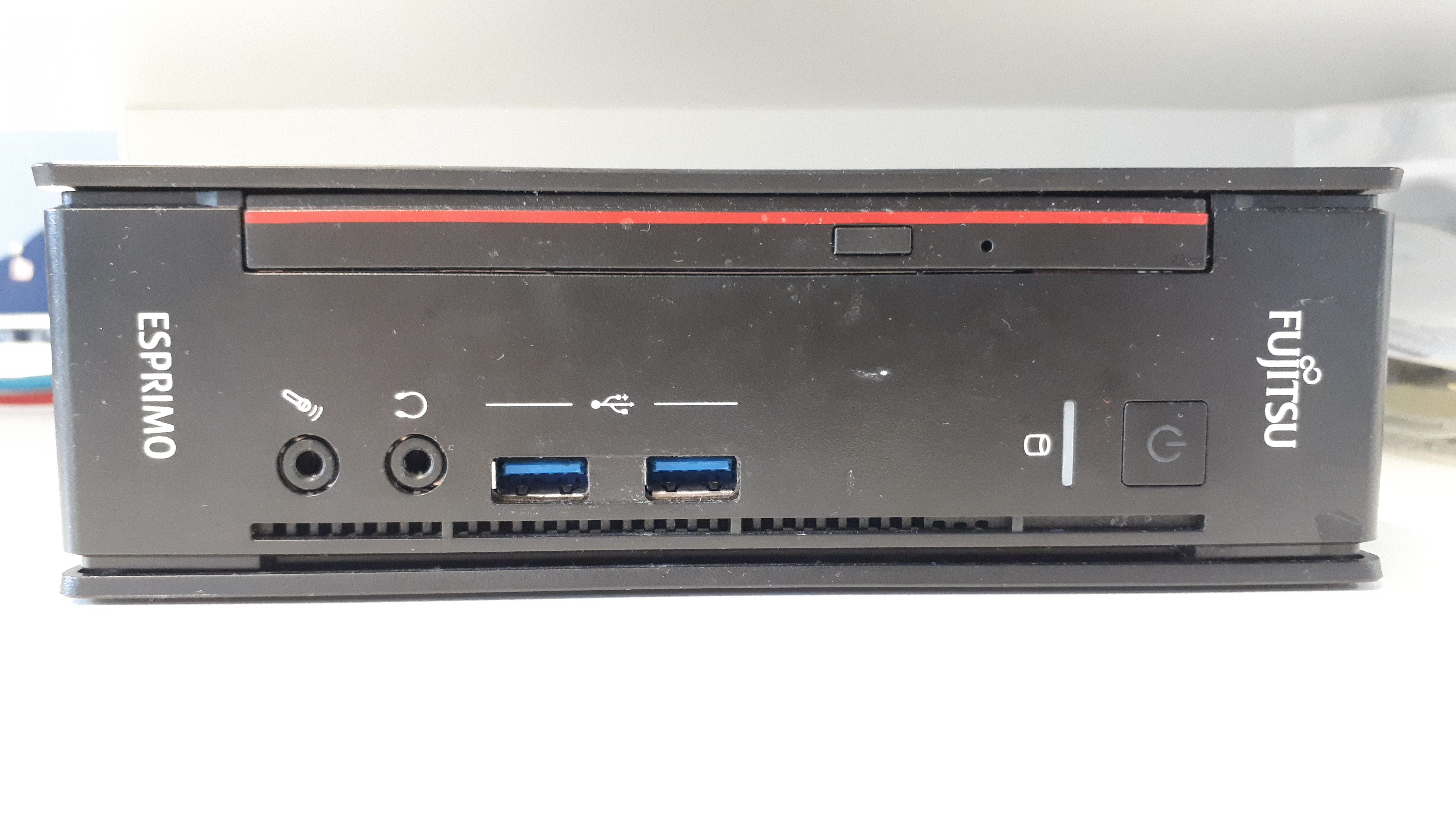
What Core is
Ghost announced on October 5, 2026 that it has emerged from a year of stealth alongside an $11 million seed round led by Andreessen Horowitz, with Abstract, Audacious Ventures, SV Angel, and Nova also participating. The founder is Zain Javaid, 19, who worked briefly as a quant before the 2022 ChatGPT release pulled him into AI. His co-founders are Nicholas Chua (19), Yifei Chen (24), and Gautam Sharda (23).
Their first product is Core, a personal computer with no screen, designed specifically to run AI agents continuously on the user's behalf. The idea, per Javaid, is to centralize a person's data — desktop files, apps, smart home devices — into one piece of hardware that acts as an always-on assistant: performing tasks, understanding the user's life, and processing information without constant prompting. Users access it through a phone app, and voice mode is available through the app rather than the box itself.
The hardware deal
Core includes an Nvidia RTX Pro 4000 SFF Blackwell GPU — a workstation-class chip — and Javaid says the GPU is bundled into the $3,499 price so buyers don't have to source one separately. It runs its own software layer, browser, and filing system, and it ships with three open-weight models preinstalled: Qwen-3.8-Next, Qwen-3.8-27B, and Gemma-4-31B. Owners can install other models from Hugging Face or load their own trained weights, and updates go out over the air — Javaid compares the model updates to how Tesla pushes software.
The units are currently being assembled at Ghost's San Francisco facility. Preorders for the first batch opened October 5, and shipping is scheduled for the last week of October.
The privacy pitch
Ghost's case is that the box is yours in a way cloud AI never will be. Javaid says the models and personal memory run locally and that all personal information is encrypted so no cloud provider or third party — including Ghost itself — can meaningfully access it. He told TechCrunch the device is programmed to keep working even if the company shuts down: "All of the source code, logic, and model weights live on the device, not the services. We build this device to not be dependent on having an outside entity maintaining the service."
There is also a network firewall in the works to limit how agents use credentials: it monitors every outgoing network request, and if it sees the agent performing a sanctioned action or exfiltrating data it shouldn't, it rejects the request and flags it for user review. Javaid's line on the whole thing: "The user owns all of it" — the device, the memory, and the data.
The honest part
This is a four-person founding team hand-assembling hardware and asking $3,499 on preorder, with first-batch shipping weeks away. Nobody outside Ghost has run an agent on one yet, so the software experience — the thing the founder himself says matters most — is unverified. The Mac Mini comparison is honest hardware accounting: you can already run local models on a compact desktop, but doing it well takes real configuration work, and Ghost is selling the removal of that friction.
The bet runs directly against the year's dominant story: hyperscalers signing hundred-billion-dollar compute commitments while this company says a slice of users wants the opposite — a box that answers to no rate limit and sends nothing home. If you want local AI today, the proven route is still a used workstation GPU and open models from Hugging Face, assembled yourself. But Core is the first product to try packaging that idea for people who will never build it themselves — and the October shipments are the test that matters.