Edited by Paul Derrington, Chief Editor
TL;DR
Anthropic gave an internal Claude research model a neglected-disease challenge: design protein binders against scorpion neurotoxins. Over 64 hours, from one prompt and four follow-ups, Claude generated 318,484 designs and picked 180 candidates; two independent labs confirmed 17 bind as designed, two of them at single-digit nanomolar affinity. Anthropic is explicit: this is binding, not an antivenom - neutralization was never tested.
The setup: one prompt, four follow-ups
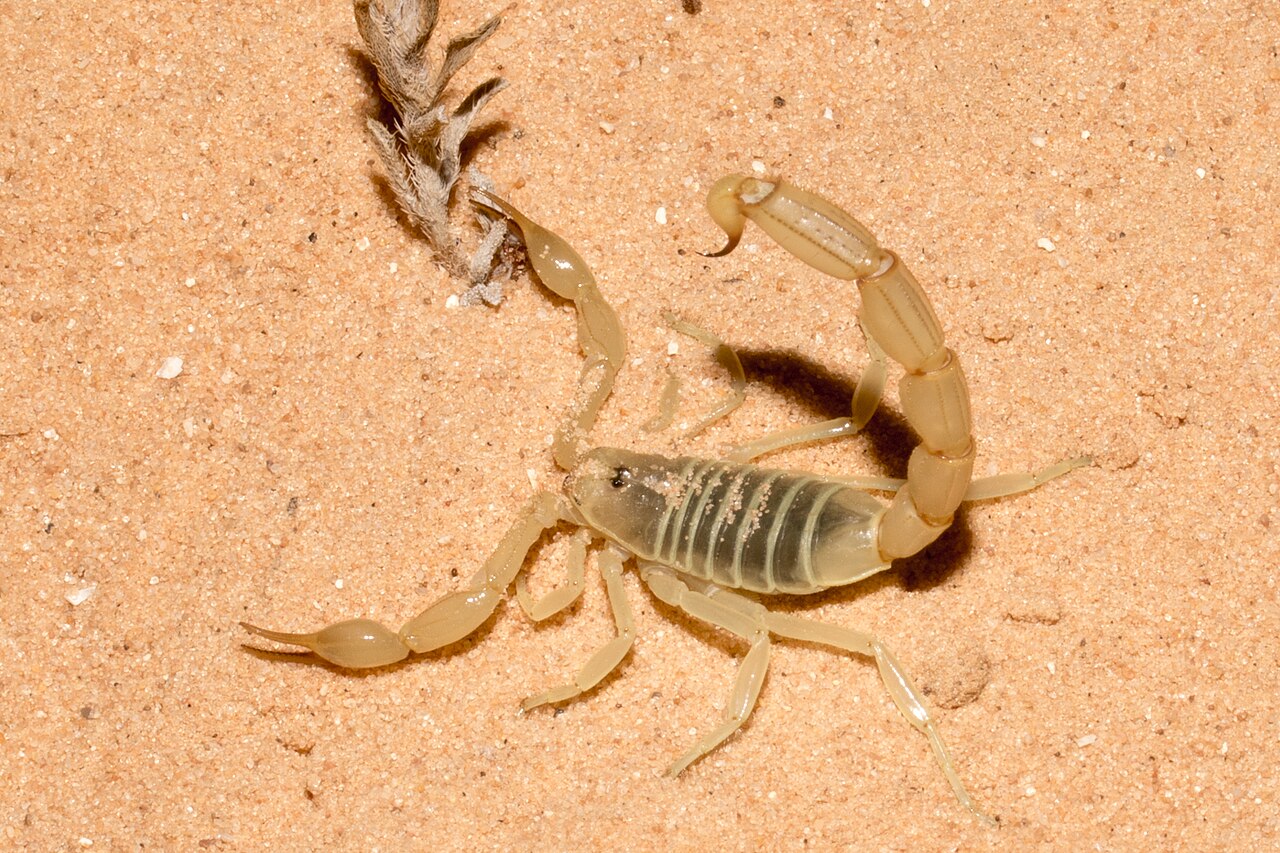
The question came from Citrini Research, a financial investment research firm: could Claude let a small team of motivated nonexperts make real progress on a genuine health problem? Anthropic's life-science team picked scorpion envenomation. Scorpions sting more than 1.2 million people a year, killing over 3,250 - mostly children in places with poor medical access. New treatments don't get made because they can't earn back their development cost; scorpion envenomation is described as a neglected tropical disease.
Claude worked inside Claude Science, Anthropic's research environment, over 64 hours. The initial prompt defined the targets, tools, and scoring rules; beyond that, Claude set its own quality thresholds, decided how heavily to lean on each of its 12 design tools, chose toxin structures from the Protein Data Bank and AlphaFold database, and developed the strategy for designing binders against multiple toxins. It also analyzed the research data, generated the figures, and drafted the final report - and the emails sending protein sequences to the testing lab were written by Claude.
What the labs actually found
Across the campaign Claude generated 318,484 protein designs and screened 553,052 design-toxin pairs, at a compute cost on the order of 10,000 GPU hours. Claude selected 180 candidates for testing; the team added 31 more with Claude's help, for 211 total. Two contract research organizations tested them independently: Adaptyv Bio used a cell-free expression system, Twist Bioscience used mammalian cells. Both measured binding by surface plasmon resonance, and a design only counted as a binder if it was a hit at both labs, in every replicate, with a dissociation constant of 1 micromolar or tighter, and no stickiness to an unrelated control protein.
Seventeen of the 211 met that bar, each against a single toxin: seven against Cn2 (from the Mexican scorpion Centruroides noxius), four against AaH II, four against AaH I, and two against LqhIII. None qualified for the fifth toxin, Ts1, and none of the multi-toxin designs met the criteria for more than one target. Among single-toxin designs the hit rate was 18%, consistent with typical protein design campaigns, including Anthropic's previous work. The two strongest, Cn2-B1 and Cn2-B2, bound Cn2 in the single-digit nanomolar range at both labs - and competition experiments suggest they attach at or near the same site as an antibody already reported to neutralize Cn2 in mice.
Why this is not an antivenom (yet)
Anthropic leads with the caveat itself: "We have not confirmed whether these binders neutralize scorpion venom in a cellular environment, so we do not claim to have produced an antivenom." The tests used lab-grown recombinant toxins, not venom purified from actual scorpions. The next steps are spelled out: confirm binding against real venom toxin, run patch-clamp recordings to see if the design stops the toxin acting on sodium channels, then test efficacy in mice - and beyond that, safety, stability, and a price poor regions can afford.
What makes this more than a demo is the transparency: Anthropic released all 211 designs and their binding data for other researchers to build on. Independent experts were measured. Susana Vázquez Torres (Spanish National Cancer Research Centre): "Designing a binder against almost any target no longer seems unrealistic... binding itself is no longer the main bottleneck." Timothy P. Jenkins (Technical University of Denmark) called it "a great showcase of the AI-driven paradigm shift we are seeing in therapeutic discovery." Vázquez Torres added that the challenge is developing molecules that can become real drugs.