
By Paul Derrington, Jr.
CEO | Chief Engineer | Research Engineer | Editor, D-CSIL
4 min read
Key Takeaways
On November 20, Anthropic mathematician Levent Alpöge released a proof of the Riemann Hypothesis built with Claude, written entirely as about 17 million lines of Lean code. On November 21, the Lean and Mathlib communities certified that both the statement and the proof are correct. There is still no human-readable paper, and the Clay Mathematics Institute still lists the problem as unsolved.
What was claimed on Friday?
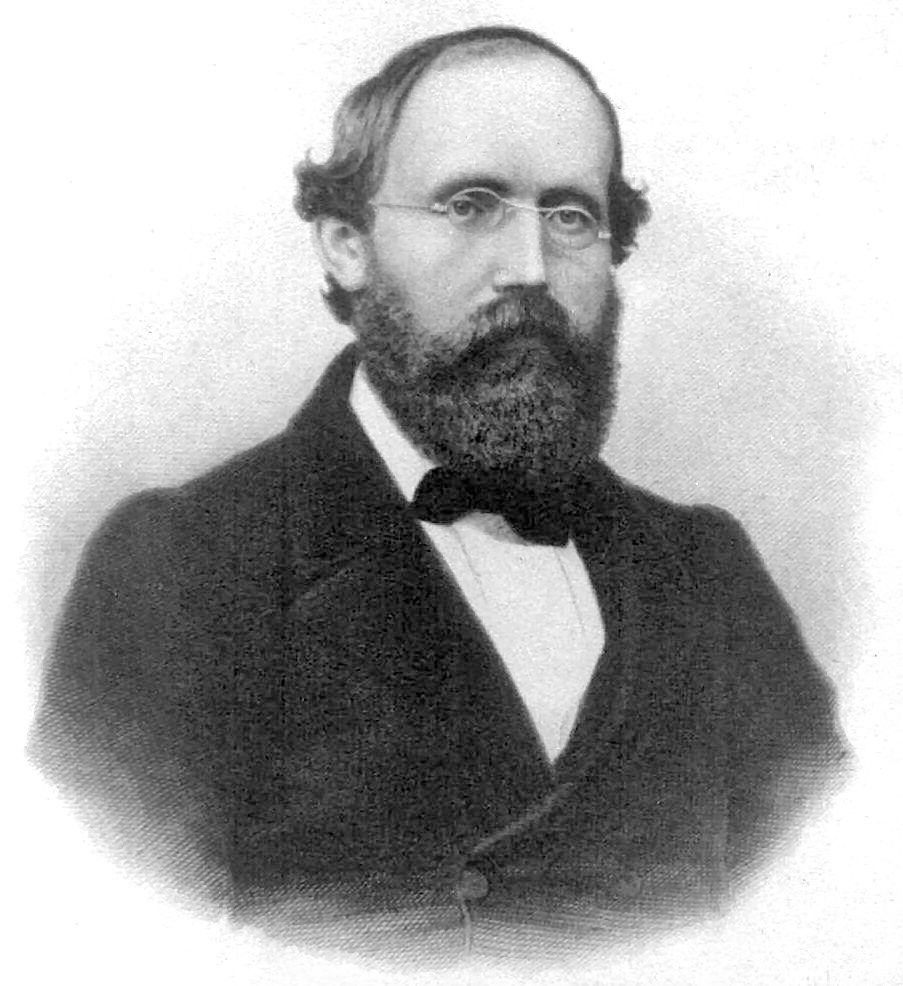
The Riemann Hypothesis, posed by Bernhard Riemann in 1859, says every nontrivial zero of the zeta function has real part exactly 1/2. It is the classic open problem about how the prime numbers are distributed. On November 20, Levent Alpöge, a mathematician on Anthropic's technical staff, posted a four-page note that begins: “I believe I have, working with Claude, discovered a proof of the Riemann Hypothesis.” He says the method also resolves the Generalized Riemann Hypothesis.
There is no paper. Alpöge released the argument only as Lean code: about 17 million lines across 175,187 files, in a 14-part archive. His note's timeline runs from October 6 to November 16, 2026, and he credits Claude with the decisive speed at the end: “Claude far outpaced me near the finish line. No, Claude flew, and danced, and sparkled near that finish line.” The argument descends from Stepanov's method; for a von Mangoldt sum of length X, the chain of theta lifts Claude suggested has length about √X. Alpöge cautions that his descriptions of the steps where Claude was the expert are paraphrases and may change.
How do we know the code proves the actual hypothesis?
That is the first failure mode for a proof delivered as code: the file compiles, but the theorem it proves is subtly not the famous one. Here the target statement is not Alpöge's own wording. It is Mathlib's definition, RiemannHypothesis, which the Lean community says has been carefully vetted by experts in Lean and number theory: if the zeta function is zero at s, s is not a trivial zero and s is not 1, then the real part of s is 1/2.
The community isolated that statement in a file importing only Mathlib and compared it against the theorem in Alpöge's library using two independent tools, comparator and con-leche --compare. Both confirm the proved theorem is exactly Mathlib's statement. MIT mathematician Andrew Sutherland's verification page lists five headline theorems, including the generalized forms for Dirichlet L-functions; his scope note is explicit that this covers Dirichlet L-functions, not Dedekind zeta functions or automorphic L-functions in general.
Who checked the proof itself?
On November 21, the Lean and Mathlib communities, in a joint statement endorsed by the Lean FRO and the Mathlib Initiative, wrote: “We hereby certify that both the statement and the proof of the Riemann Hypothesis are correct,” adding that they have full confidence in the proof. Dozens of people have compiled the codebase and reproduced the same raw proof export.
The exported proof was checked by Lean's official kernel, by the con-leche and con-ron checkers, and by several independent third-party checkers written in different programming languages; con-leche and con-ron carry a formal proof, relative to set theory, that they cannot accept a false proof. Sutherland reports all 175,187 modules compile with zero errors, every module replayed through the Lean kernel, the independent nanoda kernel and con-leche accepting the full export, and the five headline theorems depending only on the three standard axioms. His verdict: “Honestly the chance that anything is fishy here is approximately zero.” One check was still open at his November 21 update: his own end-to-end lake comparator replay of the export was still running, though its statement comparison and axiom check had already passed.
What has not happened yet?
Nobody can read this proof yet in the normal sense. Alpöge writes that a fully detailed draft passed 250,000 pages, that he has presented a complete argument before mastering all of its mathematics himself, and that he intends to understand it and write it up properly. The machine checks settle whether the formal proof is correct; they do not explain why it works, and the Lean community's statement ends by looking forward to the work that will explain the new ideas.
The Clay Mathematics Institute still lists the Riemann Hypothesis as unsolved, and community certification is not the Institute's prize process. The joint statement also certifies the Riemann Hypothesis itself; Alpöge's generalized claims rest on the five checked theorems Sutherland lists, within the Dirichlet scope he states, and his further expectation of an Extended Riemann Hypothesis is just that — an expectation, not a result.