TL;DR
On October 7, Zuckerberg's Biohub turned its $500 million Virtual Biology Initiative into a $1.8 billion coalition: Meta, Google DeepMind, and Isomorphic Labs are in for $300 million together, the Department of Energy for $500 million-plus, and NIH is folding in datasets from $500 million in prior federal research. The goal is AI models — virtual cells — that predict how a human cell reacts to a drug or disease before anyone runs the lab experiment. The data eventually goes public; the companies paying for it get an embargoed head start, and the first datasets are expected in about a year.
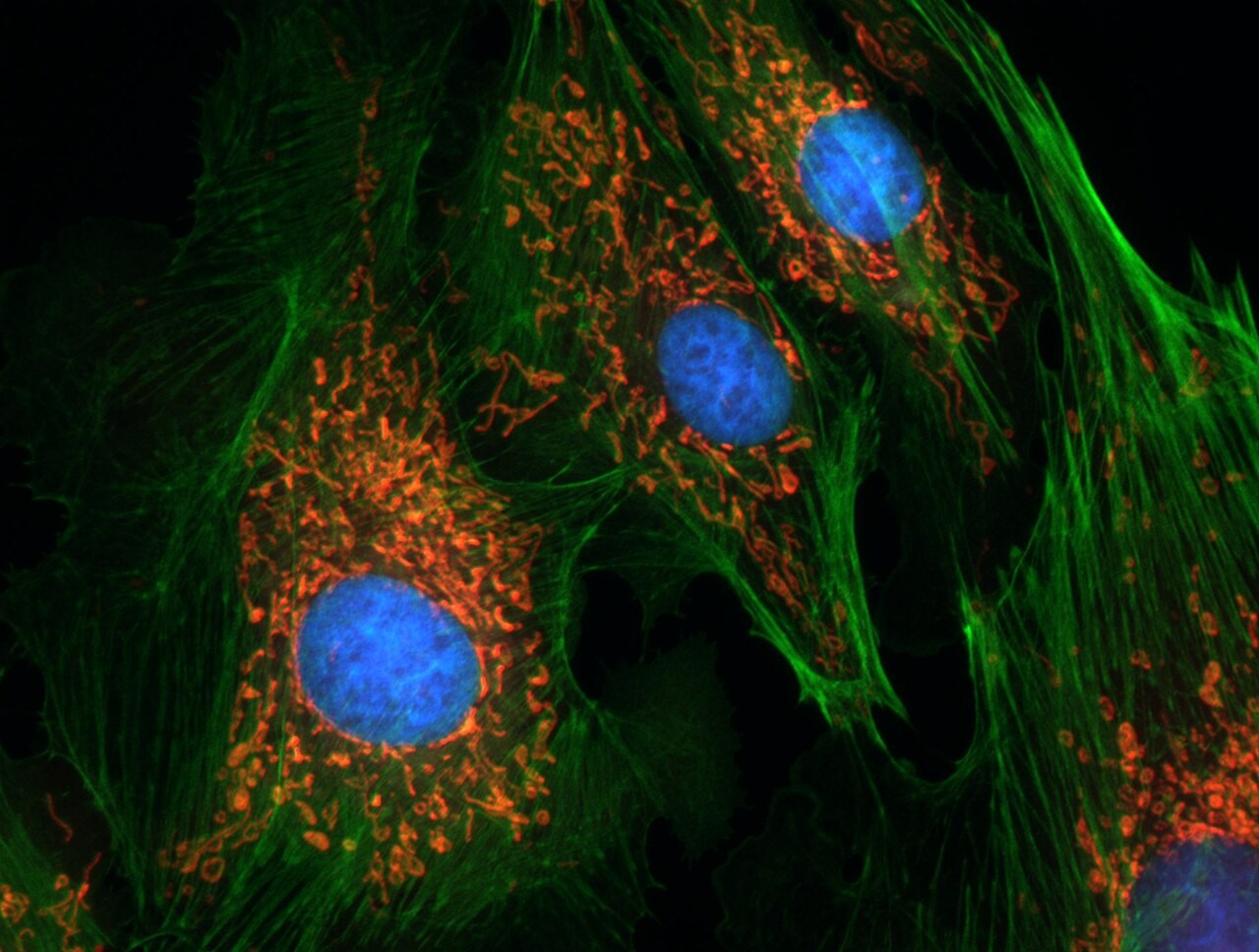
The goal: a flight simulator for biology
A virtual cell is an AI model detailed enough to predict what happens when a drug, a mutation, or a disease hits a human cell — without anyone running the experiment in a lab first. Researchers introduce a variable, the model shows a predicted outcome, and only the most promising leads move to physical testing. Biohub's head of science Alex Rives called building one “one of the most important challenges for the next era of science.”
The Virtual Biology Initiative started in April 2026 as Biohub's solo $500 million bet. On October 7 it became a five-year coalition worth $1.8 billion in funding, data, computation, and new measurement technology — which Biohub describes as the largest coordinated commitment to generating AI-ready biological data to date. The stated payoff: compressing drug development timelines that currently take years.
Who's paying, and what each brings
The tech trio — Google DeepMind, its drug-discovery spinout Isomorphic Labs, and Meta — are collectively putting in $300 million for the technologies and multi-modal datasets behind predictive models of life. The Department of Energy is investing more than $500 million over five years through its Genesis Mission: lab measurement, AI analytics, imaging, and computation drawing on exascale supercomputing, X-ray and neutron scattering, cryo-electron microscopy, and autonomous labs across the National Laboratory system.
NIH, through its Bio Genesis Mission, coordinates relevant datasets, repositories, and knowledge bases developed through more than $500 million in prior federal investment; Biohub standardizes them for AI model training. Biohub's own $500 million commitment anchors the work — $400 million for measurement tech (cryo-electron tomography, microscopy that can image millions to billions of cells in living tissue) and $100 million for research outside Biohub. NVIDIA is contributing computing infrastructure, software, and technical expertise, and the Allen Institute, Broad Institute, Gladstone Institutes, Human Cell Atlas, Human Protein Atlas, and Wellcome Sanger Institute are part of the community effort.
The data gap it's trying to close
The bottleneck is data, not models. Current cell datasets run to hundreds of millions of cells, Rives told Reuters, while an accurate predictive model will require billions and eventually trillions. The initiative is designed to close that gap by measuring how cells respond to interventions across far more cell types and conditions than have yet been studied — using techniques like spatial transcriptomics and large response screens, much of it never generated in a coordinated way.
The partners aim to compress work that would normally take decades into five years, with a first dataset ready in about a year. “By combining resources and expertise, we can accelerate the development of universal cell models with sufficient biological complexity to predict how any cell responds to an intervention,” said NIH's Nicole Kleinstreuer — with timelines substantially faster than attempting the same results through laboratory experiments alone.
'Open' — with a paid head start
The datasets will eventually be released publicly. But the companies funding them get a head start: “With commercial funders we have embargo periods where there's a period of time where the groups can work on the data, and then it becomes available as a public scientific resource,” Rives told Reuters. The government-funded work running alongside it carries no such restrictions. That's the deal Biohub is using to pull private money into what it describes as open science — and Biohub says it plans to approach pharmaceutical companies and philanthropies next.
Dr. Priscilla Chan put it plainly: “Biology has been just sort of a clever discovery-based science until this point.” The bet here is that $1.8 billion of standardized, AI-ready data turns it into a predictive one. The public gets the data eventually; the funders get to learn the language of the cell first.